The Rise and Fall of the Hippodrome: Ocean City’s Lost Pier
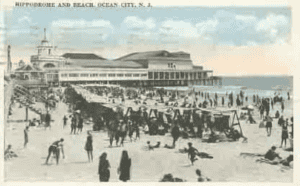
Long before the modern steel coasters of Castaway Cove dominated the skyline or the neon lights of the modern arcades hummed with activity, a massive, ornate structure called the Hippodrome stood at the water’s edge. It was the unrivaled center of Ocean City’s nightlife and culture, a masterpiece of Victorian-era ambition. The Hippodrome was more than a pier; it was a monument to the “Golden Age” of the American Boardwalk, a place of elegance and spectacle. Its sudden destruction in 1927 fundamentally altered the island’s architectural future.
A Masterpiece of Victorian Entertainment
The construction of the Hippodrome embodied a bold vision of bringing “big-city” variety shows and high-class leisure to what was then a growing seaside resort. Architects and developers designed a sprawling wooden structure that felt like a fantasy world perched over the Atlantic.
Characterized by its towering minarets, fluttering flags, and thousands of incandescent light bulbs that shimmered over the waves at night, the pier was a visual marvel. Its grand entrance served as a portal, inviting visitors to leave the everyday world of sand and salt behind and step into a realm of high-society entertainment and architectural wonder.
The pier also housed a 2,000-seat auditorium, which served as a cultural hub. On any given night, the schedule might include:
- Vaudeville acts featuring the top talent of the era.
- The latest silent films, accompanied by live organ music.
- Orchestral performances that drew the island’s social elite.
Complementing the theater was a grand ballroom. Here, the big bands of the day played for couples dressed in their formal summer whites, dancing on a floor that stretched hundreds of feet over the ocean swells.
The grandeur of the Hippodrome came to a sudden, violent end on the night of October 11, 1927. What began as a small fire in a nearby Boardwalk restaurant quickly spiraled out of control. Fed by dry wooden pilings and a brisk autumn sea breeze, the “Great Fire” swept through the commercial district with terrifying speed.

Witnesses described the tragic sight of the grand pier being consumed by the inferno. Because it was built primarily of wood, the Hippodrome burned like a massive torch. As the fire ravaged the supports, the grand towers and ballroom collapsed into the surf, marking the end of an era for the Ocean City Boardwalk. By the next morning, the heart of the city’s entertainment landscape was a smoking void.
The Legacy: Lessons in Resilience
The loss of the Hippodrome was a staggering blow, but it prompted a complete rethinking of how the city should be built. The destruction proved that the old Victorian reliance on wood was too dangerous for a high-density resort. When the city began to rebuild, it moved away from flammable wood and toward fire-resistant materials such as steel and concrete.
This shift in philosophy led to the construction of the Ocean City Music Pier in 1928 and 1929, designed in the Spanish Mission style as a “fireproof” successor to the Hippodrome. Although the Music Pier eventually became the city’s primary cultural center, the Hippodrome remains a “ghost” of the Boardwalk, a memory of a time when the Jersey Shore was defined by grand, sprawling wooden palaces.
The Hippodrome was the pinnacle of a bygone era, where Victorian grandeur met the excitement of a new century. Its fall gave rise to the resilient, modern Ocean City we know today, but those who look out at the waves can still imagine the “Lost Pier’s” glimmering lights reflected in the water.