The Somers Mansion Connection: Ocean City’s Link to the Mainland
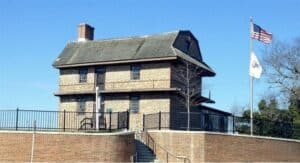
As you cross the 9th Street Bridge toward the mainland, a solitary, three-story brick house stands atop a hill in Somers Point, overlooking Great Egg Harbor Bay. This is the Somers Mansion, the oldest house in Atlantic County, and it stands as a physical reminder that Ocean City’s history predates the first Boardwalk plank. Before it became a bustling resort, the island was an extension of the Somers family estate, a wild, natural resource that laid the agricultural foundation for what would eventually become “America’s Greatest Family Resort”.
The story of John Somers, a devout Quaker who settled the area in the late 1600s, marks the beginning of this coastal dynasty. After purchasing land from the West Jersey Proprietors, Somers established a vast plantation on the mainland, using the surrounding geography for trade, farming, and survival.
The mansion, constructed around 1725, was built of local brick and designed to withstand the harsh coastal elements. Its position on the hill was strategic; it served as a high-ground vantage point overlooking the waterways, allowing the Somers family to monitor boat traffic and tide changes in the bay that separated their home from the barrier island.
Long before the Methodist ministers arrived in 1879, the seven-mile stretch of sand we now call Ocean City was known as Peck’s Beach. Although named after the whaler John Peck, who used the island as a temporary base, the land was primarily used by the Somers family as a massive, natural extension of their farm.
In the 18th and early 19th centuries, the island served as a vast, naturally enclosed pasture. Livestock safety was a primary concern for colonial farmers, and the surrounding saltwater provided a perfect barrier that kept cattle and sheep from straying and from being easily reached by mainland predators. The island’s nutrient-dense “salt hay” and marsh grasses were essential for feeding livestock during the summer months, freeing mainland fields for food crops.

Life on the Island Before the Ministers
Life on Peck’s Beach during the Somers era was rugged and seasonal. Farmhands and family members would cross the bay in small skiffs to tend the herds, often staying in primitive “cow houses” or temporary shelters. It was a time of maritime multitasking; the Somers family leveraged the island’s location not only for grazing but also for small-scale whaling operations and seasonal fishing camps.
For nearly 150 years, the mainland and the island were economically and socially intertwined. The island was not seen as a place for leisure but as a frontier of the Somers family’s coastal empire, a place of labor that sustained the family’s wealth and influence on the hill.
The Transition: From Pasture to Paradise
The shift from agriculture to tourism began gradually as the Somers family sold off parcels of their island holdings. The pivotal moment came in 1879, when the Lake brothers and their associates met under a cedar tree on the island. They purchased the land that would transform a wild grazing ground into a structured Methodist retreat.
Even as the city of Ocean City grew, the link to the Somers Mansion endured. The modern 9th Street Causeway (Route 52) follows the historic route used for centuries by those traveling between the Somers estate and the island. The “gateway” to the city is quite literally the same path that once saw cattle driven across the marshes to the sea.
The Somers Mansion is not just a mainland museum or a hilltop landmark; it is the “mother house” of Ocean City. It represents the era before the “America’s Greatest Family Resort” slogan was coined, when the island was a wild, windswept retreat for a pioneering family.
The next time you catch a glimpse of the mansion’s red brick walls while crossing the bridge, remember that the sand beneath your feet was once the frontier of the Somers family’s empire. Ocean City’s modern identity is built on a foundation of faith and family, but its physical presence began with the livestock and the legacy of the house on the hill.