The Wetlands: Why the “Meadows” are Vital to Storm Protection
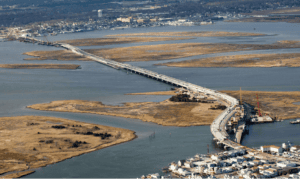
To casual travelers crossing the 9th Street Causeway or 34th Street Bridge, the large, grassy fields along the road may seem like simple “swampy” zones. Locally called the “meadows,” these salt marshes are often ignored in favor of the island’s bright Atlantic beaches. Nonetheless, these wetlands are more than just a scenic sunset view; they serve as Ocean City’s vital insurance policy. Acting as the first barrier against bay-side floodwaters, the wetlands perform a quiet yet constant role that keeps the island dry and its inhabitants protected.
The Natural Sponge: Absorbing the Surge
The salt marsh’s main scientific wonder is its capacity to act as a large natural sponge. During a nor’easter or tropical storm, water levels in Great Egg Harbor Bay can increase quickly due to strong winds and atmospheric pressure. Without the wetlands, this excess water would flow into the city’s streets and basements.
The porous peat soil and the complex network of tidal creeks in the meadows are built to absorb and retain millions of gallons of storm surge. By gradually releasing this water over multiple tide cycles, the wetlands help to “dampen” the flood peak. This natural process prevents the severe flash flooding common in highly developed areas, where infrastructure often channels water directly against solid bulkheads.
Wave Breakers: Blunting the Force
Wetlands do more than just hold water; their physical structure acts as an advanced “wave breaker.” The dense vegetation, primarily Spartina alterniflora (smooth cordgrass), forms a textured surface that generates friction.
As storm waves surge across the bay toward the island, they hit a barrier of vegetation. The friction from the grass dampens the waves’ strength, decreasing their size and speed before reaching homes or public structures. Often, a broad area of healthy marsh can cut wave energy by more than half, greatly reducing the likelihood of damage to bayfront properties.

Nature’s Nursery: A Biological Powerhouse
Although wetlands are crucial for humans due to their protective qualities, they are equally vital as a biological powerhouse. They act as “nature’s nursery,” providing a safe, nutrient-rich habitat for a diverse range of wildlife.
It is estimated that more than 75% of New Jersey’s commercial fisheries, including species like blue crabs, sea bass, and flounder, rely on these salt marshes at some stage of their life cycle. These meadows also serve as vital stopover and nesting sites for local birds, from the soaring Osprey to the elusive Saltmarsh Sparrow. The well-being of our local economy—covering everything from seafood on our plates to birdwatchers in parks—is directly connected to the health of these meadows.
The Economic Impact: Lessons from Sandy
The economic importance of these wetlands is tangible. After Superstorm Sandy in 2012, researchers carried out detailed studies to measure exactly how much protection the salt marshes offered.
The findings were remarkable: research indicated that New Jersey’s remaining wetlands averted over $430 million in extra property damage during the storm. In regions with extensive, healthy marshes, the harm to homes and businesses was much less compared to areas where the shoreline was completely “hardened” with concrete and steel. For a community such as Ocean City, these meadows serve as a valuable infrastructure asset that provides ongoing benefits whenever the wind picks up.
Modern Challenges: The Fight Against “Marsh Drowning”
Although wetlands are resilient, they are now confronting an unprecedented issue: “marsh drowning.” As sea levels rise more rapidly, salt marshes are increasingly submerged for