Nicholas Kambitsis on The Hidden Economics of Idle Space in Gas Stations and How to Turn It Into Revenue
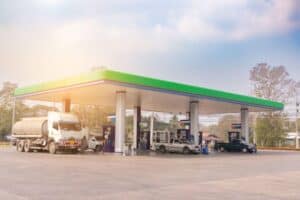
In modern fuel retail, profitability is no longer defined solely by fuel margins or in-store sales volume. Nicholas Kambitsis highlights that a growing portion of untapped value lies in areas most operators overlook, the spaces that remain unused, underutilized, or inefficiently designed. These zones, often dismissed as operational leftovers, represent a silent drain on potential revenue.
Across multi-unit operations, subtle inefficiencies compound over time. Parking areas without purpose, underused forecourts, and empty interior sections collectively shape what Nick Kambitsis points to as a hidden economic layer within fuel retail. Recognizing and activating this layer is becoming a defining factor in long-term business performance.
Nicholas Kambitsis on Identifying Idle Space Within Fuel Retail Environments
Idle space is not always obvious. It rarely presents itself as just empty square footage. Instead, it appears in overlooked transitions, low-engagement zones, and areas that fail to generate interaction.
Within a typical gas station layout, idle space may include:
- Forecourt sections that do not influence customer movement
- Interior corners without product visibility or engagement
- Parking areas lacking structured purpose or flow
- Underutilized exterior zones with no revenue-driving function
From an operational standpoint, Nicholas Kambitsis emphasizes that identifying these areas requires a shift in perspective, from static design thinking to dynamic usage analysis.
Rethinking Space as a Revenue Asset
Traditional fuel retail models treat space as a fixed necessity rather than a flexible asset. However, evolving consumer behavior challenges that assumption.
Reframing space as a revenue driver involves:
- Evaluating how customers move through the property
- Understanding dwell time and engagement points
- Mapping high-traffic versus low-activity zones
- Identifying missed conversion opportunities
This approach aligns with how Nicholas Kambitsis views modern operations, where every square foot is expected to contribute to performance measurably.
Converting Idle Zones Into Functional Revenue Streams
Turning idle space into productive space does not always require large-scale investment. Often, it begins with small, strategic adjustments that align with customer behavior.
Opportunities for activation include:
- Introducing modular retail setups in low-use interior areas
- Creating designated zones for seasonal or rotating offerings
- Leveraging exterior space for complementary services
- Enhancing visibility in underperforming sections
In practice, Nick Kambitsis of Raceway Petroleum reflects how structured adjustments can transform overlooked areas into consistent contributors to overall revenue.
The Role of Behavioral Flow in Space Optimization
Customers’ movement and interaction within a location are closely tied to space utilization. Without understanding behavioral flow, even well-designed spaces can remain underused.
Key behavioral factors include:
- Entry and exit patterns
- Visibility of products and services
- Natural stopping points within the store
- Time spent between fueling and checkout
By aligning layout decisions with these patterns, Nick Kambitsis underscores that operators can convert passive space into active engagement zones.
Operational Efficiency and the Cost of Inaction
Leaving space idle is not a neutral decision. It carries an ongoing cost, one that compounds across time and locations.
The impact of unused space includes:
- Lost revenue opportunities
- Reduced overall efficiency
- Lower return on real estate investment
- Missed customer engagement potential
Insights reflected through Nick Kambitsis suggest that addressing these inefficiencies is less about expansion and more about optimization.
Nicholas Kambitsis on Scalable Space Strategies Across Locations
For multi-unit operators, consistency in space utilization becomes even more important. What works in one location can often be adapted across others with the right framework.
Scalable strategies include:
- Standardizing high-performing layout elements
- Replicating successful space conversions
- Monitoring performance across different site types
- Continuously refining based on data and observation
This scalable mindset is central to how Nick Kambitsis of Raceway Petroleum approaches operational growth, ensuring that improvements are not isolated but systematically applied.
External Guidance and Industry Awareness
Understanding space optimization also benefits from broader industry awareness. Organizations such as the International Council of Shopping Centers offer observations about retail space utilization and consumer behavior trends that extend beyond traditional fuel retail thinking.
Incorporating these perspectives allows operators to align with evolving standards while maintaining operational relevance.
From Passive Layouts to Active Environments
The shift from passive to active space design represents a broader evolution in fuel retail. Locations are no longer just service points but integrated environments where every element contributes to performance.
Key transformation principles include:
- Designing with intent rather than habit
- Prioritizing engagement over static placement
- Viewing space as adaptable rather than fixed
- Continuously evaluating performance metrics
Through this lens, Nicholas Kambitsis highlights that success depends on how effectively operators turn overlooked areas into purposeful components of the business.
Why Idle Space Is a Strategic Opportunity
What was once considered excess or unused space is now emerging as a competitive advantage. Operators who recognize this shift are better positioned to adapt, grow, and maximize returns.
Strategic benefits of optimized space include:
- Increased revenue without expansion
- Improved customer experience
- Stronger operational efficiency
- Better alignment with modern retail expectations
Nicholas Kambitsis’s perspective reflects a broader movement toward precision in managing fuel retail environments.
As fuel retail continues to evolve, the focus is shifting from expansion to optimization. The ability to extract value from existing assets is becoming more important than acquiring new ones. Within this framework, Nick Kambitsis reinforces that idle space is not just an operational oversight; it is an untapped opportunity waiting to be activated through smarter, more intentional decision-making.