The Music Pier’s Original Purpose: From Social Hall to Civic Center
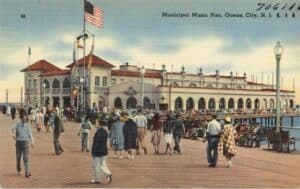
When the Ocean City Music Pier opened in 1929, its purpose wasn’t to host rock stars, touring comedians, or tribute bands. Instead, it was built as a grand social sanctuary to help the city recover from the destructive Great Fire of 1927. Now a leading concert venue, it has roots in a strong civic desire for resilience, culture, and community togetherness following the island’s most challenging period.
The Great Fire of 1927 was a pivotal disaster for Ocean City. It destroyed the core of the Boardwalk’s businesses and the historic Hippodrome pier. Following the smoke, city officials understood that they had to restore more than just the shops—they needed to revive the town’s spirit.
Finished in 1928–1929, the Music Pier stood as a strong symbol of renewal. Sitting atop the Atlantic surf, with a majestic auditorium, it conveyed to the world that Ocean City had returned even grander and more refined. This structure embodied the city’s “family-first” philosophy, offering a wholesome and upscale space for locals and visitors to come together.
The Music Pier’s design intentionally moved away from the charred Victorian wood of earlier eras. Architects opted for the Spanish Mission and Mediterranean Revival styles, which were popular among the nation’s luxury resorts at that time.
- This Mediterranean style conveyed a sense of enduring, “old world” luxury that indicated stability.
- Design Features: The building showcased white stucco walls and large arched windows, reminiscent of luxurious European seaside villas.
- Open-Air Ambience: Before modern HVAC systems, the original design featured large, operable windows that let in the ocean breeze. This natural ventilation created a sensory experience, blending the sound of an orchestra with the rhythmic crashing of waves beneath the floorboards.
- Fireproof Construction: Primarily, the shift to concrete and steel was a practical reaction to the 1927 tragedy, guaranteeing that this new “social hall” would become a lasting part of the Boardwalk.
In its early years, the Pier functioned as a multipurpose civic center and a hub of high culture. It was the permanent venue for the Ocean City Pops, an orchestra offering a refined classical soundtrack during the summer.

Beyond the music, the Pier functioned as a venue for the city’s social elite. The main floor frequently transformed into a grand ballroom for elegant dances and high-society galas, where guests dressed in their Sunday best and danced over the water. It also acted as an important civic space, hosting high school graduations, political events, and community religious services. During this period, the Pier was less about entertainment and more like a communal living room for everyone.
As Jersey Shore’s culture moved from the formal 1930s to the more relaxed 1960s and 1970s, the Pier adapted accordingly. The strict dress codes and formal “balls” were replaced by a wider variety of entertainment. The Pier transformed from a local social hall into a professional theater that could host nationally touring performers, while still maintaining its dedication to classical music and local traditions.
Modern renovations have thoughtfully balanced advanced acoustics and lighting with the need to maintain the 1920s grandeur. Although you might now witness a rock legend or a top-tier comedian on stage, the arched windows and historic stucco continue to serve as reminders of the building’s original, noble intent.
The Ocean City Music Pier is more than just a structure on pilings; it stands as a testament to resilience. Created from adversity and built to restore harmony to a city that had lost its soul, the Pier continues to be the heartbeat of the Boardwalk’s cultural scene, whether it hosts the Ocean City Pops or a fully booked rock concert.
Next time you hear the roar of a crowd or the rise of a symphony within its walls, pause to observe the architecture. You are in a space designed to heal a city that has endured the test of time, tides, and the shifting tastes of the American summer.