The Silent Echoes: The Vanished Catacombs of The Flanders Hotel
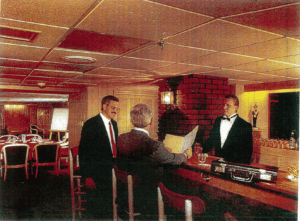
Beneath the salt-encrusted boards of Ocean City’s boardwalk, where the Atlantic’s rhythmic sound fills the air, there exists a different kind of silence. While The Flanders Hotel’s grand lobby symbolizes seaside elegance, a parallel history runs through its very foundations, a maze called the “Catacombs”. Originally a lively center with secret speakeasies and refined hideaways, this space, sitting below sea level, has undergone a stark transformation. Today, the once bustling social scene on the lower level is gone, replaced by a haunting landscape of bare brick walls and practical remnants.
A Sanctuary Carved from the Sand
When the “Jewel of the Southern Shore” was initially designed, incorporating a full basement beneath the ground was a daring feat for early 20th-century engineering. These subterranean spaces served as a “cool underground retreat,” offering a sanctuary from the intense New Jersey sun. Among insiders, the catacombs became the social hub of the hotel, especially during Prohibition.
Access to this world was a privilege exclusive to the elite. No flashy signs marked the entrance; instead, a whispered password, now forgotten, was needed to enter the gentlemen’s and ladies’ speakeasies. Within these brick walls, guests savored “forbidden delights” and secret whispers, shielded from the outside by layers of earth and the constant hum of the hotel’s infrastructure.
The Evolution of the Underground
Over the decades, as laws evolved, the catacombs adapted to cater to the leisure class. The area became a mixture of social and functional spaces.
- The Island Room was redesigned in 1985 into an elegant cocktail lounge. It originally functioned as the Men’s Locker Room, where early 20th-century gentlemen prepared for their swim in the Olympic-sized saltwater pool.
- The Inlet Room is a small theater that seats fifteen, built in 1985. It is situated at the historic site where bathers once dropped off their heavy wool bathing suits to be dried overnight.
- The Game Room has been a recreation area since the late 1950s. It previously housed the Linen Room for housekeeping before that department was moved closer to the service elevators.
- The Captain’s Room, established in 1984 through an employee contest, is a theater-style space that can seat thirty-five people.
- The Nursery and Beyond: Everyday areas of hotel life were concealed here; the Map Room was originally the hotel’s nursery, and a nearby office for convention services had previously served as the Nurse’s Office.

Living below the water line meant the catacombs were always in a delicate dance with the ocean. The “dungeon,” as staff sometimes called it, faced the constant threat of the Atlantic’s reach. In 1984, a fierce nor’easter sent seawater surging into the lower levels, leaving the Captain’s Room submerged chest-high and water lapping at the very first steps of the descent.
The once elegant catacombs have now taken on a more somber tone. The speakeasies, theater seats, and mid-century lounges have been removed. The “forbidden delights’ were cleared out to accommodate the hotel’s essential, unglamorous core functions. Instead of velvet chairs and cocktail napkins, there are now mostly bare brick walls.
The transformation from a social hub to a utilitarian basement reflects the evolving character of Flanders. Although the upper floors continue to host “magical history” and “festive celebrations,” the catacombs have returned to their simplest form. The speakeasies, which “retain much of their historical appeal,’ are now shuttered.
Looking toward the future, the spirit of restoration is beginning to stir within the hotel’s historic foundations. The Flanders is currently exploring ambitious options to revive the catacombs, aiming to return these storied rooms to the elegance and “historical appeal” they once held during the height of the Jazz Age.
Today, the only visible remnant of this once vibrant underground world is a solitary door with a gold sign, marking the entrance to a realm largely reclaimed by time. Although the glitz and glamour of the Prohibition period have faded into history, the mystery and fascination of the catacombs persist. Standing before that gold-inscribed door, one can sense the pull of a fading history, a quiet homage to an era of seaside secrets and echoes of a century of stories.