73-Year-Old Ocean City Local Frank LaFerrara Awarded Carnegie Medal for Heroic 9th Street Beach Rescue

- Ocean City resident Frank LaFerrara has received the esteemed Carnegie Medal, the top civilian heroism award in North America. The Carnegie Hero Fund Commission announced that 73-year-old LaFerrara was recognized for his remarkable bravery during a challenging water rescue at 9th Street beach.
The rescue took place outside the guarded summer season, but unusually mild weather attracted around 100 beachgoers to the shoreline. Chaos erupted when a young woman swimming near the 9th Street jetty was swept out to sea by a sudden, strong rip current.
Despite a crowd of onlookers watching from the sand, the severe ocean conditions kept everyone at bay. Frank LaFerrara was the only person who stepped forward to help.
Without formal rescue equipment, LaFerrara swam straight into the hazardous rip current, covering nearly 150 feet into the Atlantic to reach the struggling swimmer. Once there, he used his instincts to swiftly calm her, reassuring her that they would return safely.
As LaFerrara began battling the current to swim her back toward the beach, a second Good Samaritan ran into the surf with a rescue can, similar to one used by ocean lifeguards, to assist. By the time emergency authorities arrived at the scene, LaFerrara and the second responder had successfully brought the young woman safely back to shore. Since the rescue, a ring buoy has been permanently placed at the back of the beach as an emergency precaution for future bystanders.
The 9th Street jetty is well-known to locals and lifeguards as one of the most treacherous spots on the island. The structure generates severe rip currents and sudden drops, making it the scene of countless high-stakes rescues. Tragically, the area has even claimed lives in the past, underscoring the extreme peril LaFerrara knowingly jumped into.
When asked about the incident, LaFerrara shrugged off the “hero” label. He credited his level head and under-pressure focus to a lifeguarding class he took during his college years at Rider University.
“The thank-you I received from that girl was all the reward I needed,” LaFerrara said, reflecting on the honor. “If I had to do it all over again, I would do it in a heartbeat.”
At 73, LaFerrara surpasses typical expectations for an open-water rescue. As a year-round Ocean City resident and a well-known, friendly presence at the local Acme, he credits his physical fitness to a disciplined wellness lifestyle. He practices Tai Chi daily to enhance his balance, flexibility, and mental focus, complemented by a nutritious, wholesome diet.
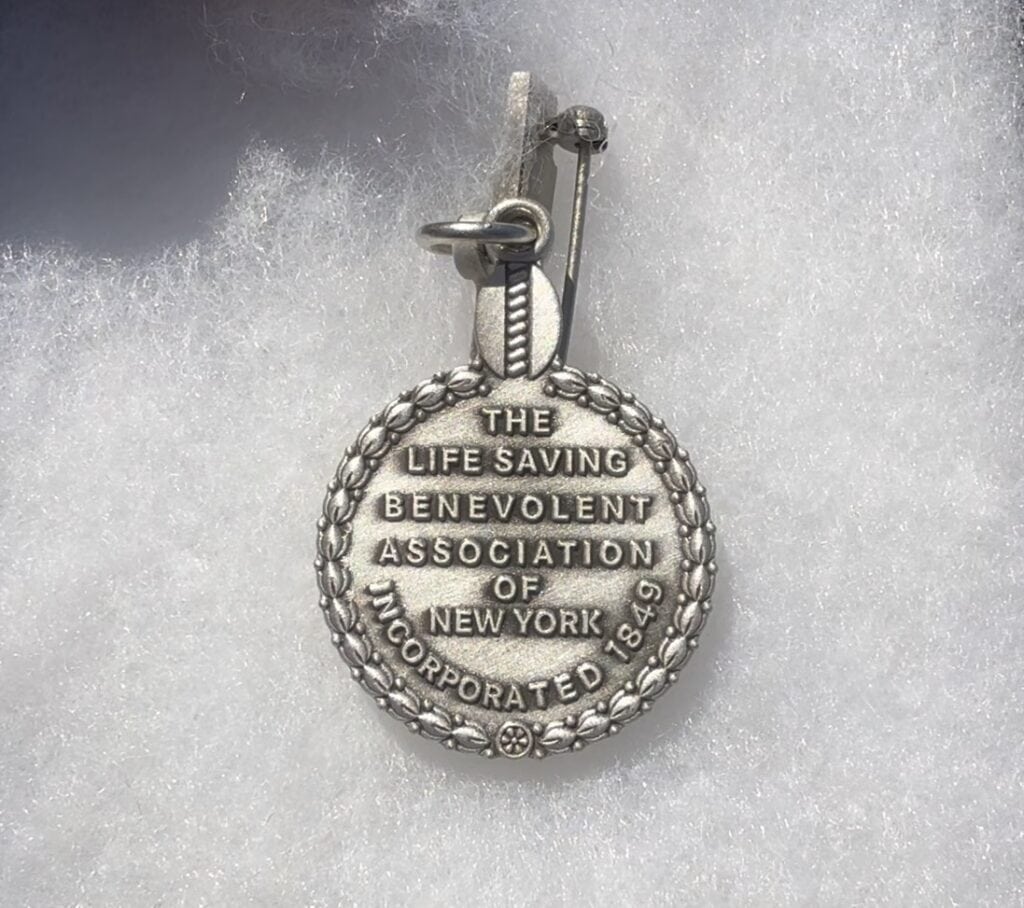
The Carnegie Medal is actually the second major honor LaFerrara has received for this rescue. He was also recently awarded the prestigious Silver Medal from the Life Saving Benevolent Association of New York, one of the oldest maritime life-saving associations in the United States, established in 1849 to honor extraordinary sea rescues.
The Carnegie Medal is uniquely selective, with only about 11% of all evaluated nominees ultimately receiving the award.
- The History: The Carnegie Hero Fund Commission was established in 1904 by industrialist and philanthropist Andrew Carnegie. Carnegie was inspired by a tragic coal mine disaster in Pennsylvania, where two men sacrificed their lives attempting to rescue trapped miners. He set up the fund to ensure that the “heroes of civilization” were recognized and that they or their families would not suffer financially for their selflessness.
- The Frequency: The Commission meets quarterly to announce recipients. Over its 122-year history, the fund has awarded 10,563 medals, averaging roughly 80 to 90 recipients per year across the entire United States and Canada.
- The Strict Requirements: To qualify for the medal, a candidate must be a civilian who knowingly and voluntarily risks their own life to an extraordinary degree while attempting to save another person. There must be conclusive evidence of an immediate threat to the victim’s life, and the rescuer cannot have any vocational or professional duty to perform the act (which excludes active-duty lifeguards or first responders acting on the clock).
Andrew Carnegie once described civilian rescuers as the true “heroes of civilization,” people who risk their lives not out of duty but driven by genuine humanity. Frank LaFerrara exemplified this when he swam into one of Ocean City’s most dangerous currents without hesitation. At 73 years old, he demonstrated that heroism isn’t limited by age, offering our community a meaningful reminder that the true guardians of our beaches are often ordinary neighbors among us.