The Dunes: Protecting the Island’s First Line of Defense
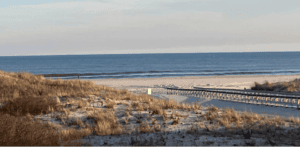
For most vacationers, the dunes are simply scenic sand formations that occasionally obscure the ocean view from a beach house’s first floor. Children see them as inviting mountains to climb. However, for Ocean City’s year-round residents, these dunes are far more than just a pretty scenery. They function as the island’s primary defense against rising tides and are vital to the city’s coastal protection. These sandy ridges operate as a dynamic barrier, representing the boundary between a manageable storm and catastrophic flooding.
Natural Barriers: The Science of Wave Absorption
The primary function of a coastal dune system is to serve as a “sacrificial” barrier. During a powerful nor’easter or hurricane approaching the Jersey Shore, it generates a storm surge—water pushed toward the coast by strong winds and low pressure. In the absence of a dune, this energy would directly hit bulkheads or home foundations with catastrophic force.
A dune functions like a shock absorber, absorbing and dispersing energy. When large waves hit its base, the sand shifts and erodes, absorbing the wave’s force. This action slows the water, preventing it from flooding streets and homes behind the dune. Additionally, the dune’s height stops the surge from overtopping the beach and entering residential areas. Essentially, the dune is an engineered barrier that sacrifices some sand to safeguard the city’s infrastructure.
Sea Oats and Vegetation: The Anchors of the Island
A pile of dry sand can be effortlessly blown away by a strong breeze or washed away during a high tide. To function properly as a barrier, a dune must be anchored. This is where biology meets geology. In Ocean City, the vital but often overlooked plant of the beach is American Beachgrass, commonly known locally as “sea oats.”
This hardy vegetation is specially adapted to endure one of Earth’s most challenging environments: salt-sprayed, nutrient-poor, wind-blown sand. Although the grass blades above ground appear beautiful, the true strength lies below the surface. The roots of American Beachgrass can grow several feet deep and wide, creating a dense, web-like network that stabilizes the sand.
As the wind carries sand across the beach, it becomes trapped in the blades of grass and accumulates at the base. The grass gradually grows through this newly deposited sand, forming a cycle of growth that helps the dune increase in height and stability over time. Without this vegetation, the dunes would simply be shifting piles of dust, unable to withstand the force of the Atlantic.

Fencing and Paths: Why “Keep Off” is a Necessity
A frequent sight in Ocean City is the split-rail or “sand fence” alongside the common “Keep Off the Dunes” signs. These are more than mere suggestions, and the restrictions are not intended to ruin your fun. Walking on the dunes is both legally prohibited and environmentally harmful because human footsteps harm beachgrass, which is vital for dune health.
Beachgrass is resilient enough to withstand hurricanes, but it is very delicate when walked on by people. Walking on it can crush the “culm” (the stem) and kill the plant. When a patch dies, it creates a “blowout,” a weak spot where wind can easily remove the sand. During a storm, these blowouts become easy pathways for the ocean, allowing waves to breach the dune and flood the town. Visitors can help preserve the island’s protective barrier by sticking to the designated wooden paths and sand crossovers.
Dune Success Stories: The Lessons of Sandy
The significance of a robust dune system is highlighted by October 2012 events. During Superstorm Sandy’s strike on the New Jersey coast, extensive damage occurred. However, post-storm analysis revealed a pattern: towns with tall, wide, and well-vegetated dunes experienced significantly less property damage compared to those lacking dunes or having low dunes.
In Ocean City, pre-storm investments in dune maintenance proved highly effective. While the beaches experienced significant erosion, as planned, the dunes protected the most vulnerable regions. In numerous areas of the island, the ocean reached the dunes’ base but did not breach them. These positive outcomes turned many previous skeptics into passionate supporters of dune preservation.
A Legacy of Protection
Looking ahead, the dunes remain essential to Ocean City’s resilience strategy. They highlight that working with nature, rather than against it, is the most effective way to safeguard our way of life. By maintaining the grass, respecting fences, and understanding sand dynamics, we ensure Ocean City continues to be known as “America’s Greatest Family Resort” for many years.