The Great Fire of 1927: The Inferno That Reshaped Ocean City’s Iconic Boardwalk
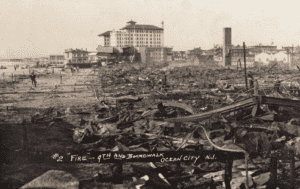
On the evening of October 11, 1927, the tranquil autumn sky over Ocean City, New Jersey, became an apocalyptic canvas of orange and red. A ferocious inferno, fueled by relentless high winds, tore through the heart of the Boardwalk, destroying more than 30 buildings and forever altering the landscape of “America’s Greatest Family Resort.” It was a night of terror and destruction, yet it ultimately paved the way for a more resilient and iconic Ocean City.
The devastation began subtly enough. Reports indicate the fire ignited between 10th Street and Moorlyn Terrace, an area bustling with shops and attractions even in the post-summer lull. The exact cause was never definitively pinpointed, though faulty wiring or a carelessly discarded cigarette were common culprits in such boardwalk fires of the era. What is certain is that once it took hold, the fire spread with terrifying speed. The wooden structures, many old and dry, proved perfect tinder for the ravenous flames. Powerful winds whipping off the Atlantic acted like a giant bellows, pushing the fire relentlessly northward and inland. Firefighters from Ocean City, aided by companies from neighboring towns like Somers Point and Atlantic City, battled valiantly, but the blaze quickly overwhelmed their initial efforts. The heat was so intense it warped steel and melted glass, sending showers of sparks and embers across the island.
The list of major losses was heartbreaking for a community built on cherished summer memories. Among the structures devoured by the inferno was the original Shriver’s Salt Water Taffy, a beloved institution that had been a Boardwalk staple since 1898. The sweet scent of caramel and taffy, usually a delight, was replaced by the acrid smell of burning wood and sugar. The grand Hippodrome Pier, a multi-story entertainment complex with a theater, shops, and amusements, was also utterly consumed. Its spectacular architecture, a marvel of its time, was reduced to ashes and twisted metal. Other losses included numerous stores, restaurants, and amusement rides, all integral to the Boardwalk experience. The roar of the fire drowned out all other sounds, replaced by the crackling of burning timber and the frantic shouts of firefighters and residents.

Yet from the ashes of this catastrophe emerged a remarkable spirit of resilience and a unique “silver lining.” Rather than merely rebuilding atop the scorched earth, the city’s leaders seized the opportunity for radical urban planning. In a bold, far-sighted move, the entire Boardwalk was rebuilt and relocated about 300 feet closer to the ocean. This strategic shift not only created more space for new development but also gave visitors an even more expansive view of the Atlantic, cementing the Boardwalk’s status as a premier beachfront promenade.
The fire also directly spurred the creation of new icons that would define Ocean City for decades. With the Hippodrome Pier gone, the city moved forward with plans for a magnificent new public venue. Less than a year after the inferno, in 1928, the majestic Music Pier opened. Designed in a graceful classical style, it quickly became the cultural heart of the Boardwalk, hosting concerts, plays, and events, a testament to the city’s determination to rise stronger and more beautiful from the rubble. Its timeless elegance remains a central feature of the Boardwalk today.
Perhaps the most significant long-term legacy of the Great Fire of 1927 was in public safety. The blaze’s devastating scope underscored the urgent need for a more robust and professional firefighting force. Before 1927, Ocean City relied primarily on a volunteer fire department. The experience of fighting such an overwhelming conflagration prompted the city to make a crucial investment: the establishment of a professional, paid fire department. This move significantly enhanced the city’s ability to protect its residents and valuable infrastructure, ensuring that future emergencies would be met with an even more organized and effective response.
The Great Fire of 1927 remains a defining moment in Ocean City’s history. It was a night of profound loss, yet it also became a catalyst for transformative change. From the destruction emerged a renewed vision, a strategically repositioned Boardwalk, enduring architectural landmarks, and a heightened commitment to public safety. The scars of that night have long healed, but the resilient spirit that rebuilt Ocean City’s heart continues to define “America’s Greatest Family Resort.”