The History of Saltwater Taffy: Ocean City’s Sweetest Export
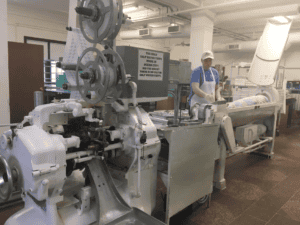
The Jersey Shore’s iconic sensory experience features the rhythmic sound of a mechanical puller, a spectrum of wax-wrapped treats, and a persistent, sweet aroma. Saltwater taffy is sticky, colorful, and notably contains no ocean water, despite its name. It has become a symbol of summer holidays. Though numerous towns vie for a stake in its heritage, Ocean City has mastered the craft, turning a basic candy into a centuries-old tradition and the island’s most cherished export.
The Myth and the Mistake: Why “Saltwater”?
To understand the history of the treat, it’s essential to start with the notable linguistic mishap of the 1880s. Although Ocean City refined the product, the name originally came from Atlantic City, just up the coast. Local legend recounts that a boardwalk candy seller named David Bradley had his shop flooded during a fierce summer storm. The following day, a young girl came in asking for taffy, and Bradley, sarcastically referencing his soaked stock, called it “saltwater taffy.”
The name stuck, showing that sometimes a marketing mistake is more powerful than facts. In truth, saltwater taffy is made from sugar, cornstarch, corn syrup, glycerine, butter, and—ironically—a tiny bit of salt and water, but never the Atlantic variety. By the time Ocean City was expanding into a top resort in the late 1890s, the name had become a permanent part of the shoreline’s language, and everyone was racing to see who could make it the best.
The Shriver’s Legacy: A Century of Sweetness
In Ocean City, one name dominates confectionery history: Shriver’s. Established in 1898 by William Shriver, it started as a small restaurant, ice cream parlor, and candy shop. As the oldest business on the Boardwalk, Shriver’s did more than sell taffy; it transformed the way the world enjoyed it.
Before Shriver’s, taffy was usually sold in bulky bags or as loose pieces. The Shriver family saw that the “shore summer’ experience was something people valued enough to want to take home. They launched the well-known souvenir box—a sturdy, rectangular container that could withstand rough car rides and, importantly, the journey through the U.S. Mail. This innovation enabled tourists to send a “taste of the shore” to relatives in the Midwest or friends in the city, helping Shriver’s grow into a global brand. When the original shop burned down during the Great Fire of 1927, the community was worried, but the Shrivers quickly rebuilt, ensuring the sweet smell of boiling sugar kept symbolizing 9th and the Boardwalk.

Edible Theater: The Magic of the Pull
Walk by any popular taffy shop in Ocean City today, and you’ll notice a crowd watching through the window. This is what locals call “edible theater.” Making taffy involves not just flavor but also a performance. Large quantities of sugar and syrup are heated in copper kettles to precisely 256°F, reaching the “hard ball” stage, before they are poured onto cooling tables.
Next comes the magical pulling stage. In the past, this was done manually using large wall hooks, a physically demanding task requiring significant upper-body strength. Today, mechanical taffy pullers—metal arms that rotate in a mesmerizing, looping motion—handle the work effortlessly. This step isn’t just visual; it aerates the candy, trapping tiny bubbles that give the taffy its characteristic light and chewy texture. Watching the enormous, shiny candy logs being stretched and folded to achieve the ideal consistency is a rite of passage for every child visiting the island. Ultimately, the candy is placed into rapid wrapping machines that cut and twist the wax paper at over 100 pieces per minute.
The Essential Souvenir
In an age dominated by digital gifts and advanced gadgets, the humble box of saltwater taffy still tops the list as the most popular gift visitors bring home. Why is that? Because it acts as a time capsule. A single piece of vanilla, peppermint, or the debated “molasses” flavor can instantly recall a sunny afternoon on 12th Street beach or a midnight walk past the arcades.
This tradition spans generations. Grandparents gift boxes to their grandchildren, sharing stories of the flavors they loved in the 1950s. It’s a courteous “thank you” to neighbors who watered the plants while the family was away, and it serves as proof that you truly spent your week at “America’s Greatest Family Resort.” As long as the Atlantic tides rise and fall, the sugar keeps boiling, the machines keep pulling, and Ocean City continues to ship its sweetest export worldwide.