Beach Replenishment 101: Why the Sand is Pumped
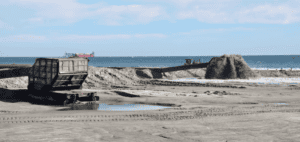
Have you ever stood on the beach in midwinter and watched a massive iron pipe spew a slurry of dark water and sediment onto the shore? Or perhaps you’ve returned for a summer vacation to find a beach twice as wide as the one you remembered from the previous year. While it might look like a simple construction project, it is actually a massive engineering feat. In Ocean City, New Jersey, the sand under your toes isn’t always just “nature at work”; it is often the result of a multi-million-dollar intervention called beach replenishment.
The Necessity: A Battle Against the Tide
Ocean City, like all barrier islands, is a dynamic environment. It was never meant to stay in one place; naturally, these islands “roll over” as sea levels rise and storms push sand from the ocean side to the bay side. However, because we have built a multi-billion-dollar city with a world-famous Boardwalk and thousands of homes on this shifting sand, we have effectively pinned the island in place.
Ocean City is especially prone to erosion because of its geographic orientation and proximity to the Great Egg Harbor Inlet. Inlets are notorious for “trapping” sand, which prevents the natural north-to-south drift of sediment that would otherwise nourish the beaches. Without human intervention, the Atlantic Ocean would eventually reclaim the beachfront, threatening the structural integrity of the Boardwalk and the homes along the coast. Replenishment is not just about giving tourists a place to put their umbrellas; it is the city’s primary defense against the existential threat posed by the rising sea.
The Process: How to Build a Beach
When the beach becomes too narrow, the U.S. Army Corps of Engineers is called in to perform what amounts to a massive plumbing job. The process, known as hydraulic dredging, is a marvel of modern engineering.
- Mining the Sand: A massive ship, called a “hopper dredge” or a “cutterhead suction dredge,” travels roughly one to two miles offshore to a designated “borrow area.” This is a spot on the ocean floor where the sand is similar in grain size and color to the natural beach.
- The Slurry: The dredge lowers a long suction pipe to the seafloor, vacuuming up a mixture of sand and seawater. If it’s a cutterhead dredge, a rotating blade first breaks up the hard-packed sediment.1
- The Pipeline: This slurry is then pumped through a series of submerged steel pipes that run along the ocean floor and emerge onto the beach.
- Discharge and Distribution: The mixture erupts from the pipe onto the shore. Bulldozers and graders then work around the clock, spreading the new sand to match a specific “design profile.” This profile ensures the beach has a gentle slope and a high berm, maximizing its ability to absorb wave energy.
- De-watering: Initially, the new sand looks dark and muddy because it is saturated with water and organic material from the seafloor. After a few days of sun-bleaching and de-watering, it turns into the familiar white sand we associate with OCNJ.

The Cost of Beauty: An Expensive Shield
This level of engineering does not come cheap. A single replenishment cycle for the north end of Ocean City can cost between $10 million and $30 million, depending on the amount of sand required. Because Ocean City is part of a federally authorized 50-year protection plan, costs are typically shared. The federal government usually covers 65% of the cost, while the State of New Jersey and the City of Ocean City split the remaining 35%.
In a town that relies so heavily on tourism, this is considered an essential investment. Without a wide beach, the city would lose its primary economic engine. Furthermore, replenishment is a recurring necessity. Ocean City typically undertakes a major project every three years. While some critics argue that “pouring money into the ocean” is a temporary fix, proponents point out that the cost of not replenishing, including the loss of the Boardwalk and hundreds of beachfront properties, would be far higher.
The Result: A Buffer for the City
The true value of beach replenishment is often evident only during a storm. A wide beach acts as a massive shock absorber. When a nor’easter or a hurricane strikes, the waves expend their energy on the beach’s sacrificial sand rather than slamming into the Boardwalk’s bulkhead or the foundations of oceanfront homes.
In 2012, during Superstorm Sandy, the areas of the New Jersey coast that had recently undergone replenishment projects fared significantly better than those that had not. In Ocean City, the widened beach and reinforced dune systems (often built as part of replenishment) were credited with preventing millions of dollars in property damage.
Ultimately, beach replenishment is a compromise. It is a way for modern civilization to coexist with the Atlantic Ocean’s volatile power. While we cannot stop the tides or the storms, we can, through engineering and a lot of offshore sand, buy ourselves a few more decades of summer memories at “America’s Greatest Family Resort.”