The Sophisticated Tradition of High Tea at The Flanders
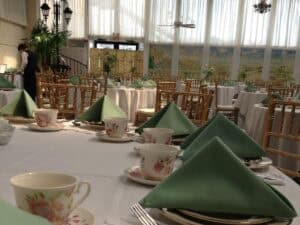
The High Tea tradition at The Flanders Hotel is more than just a culinary event; it is a meticulously preserved portal into the grandeur of 1920s seaside luxury. Expanding on the hotel’s storied history and the cultural evolution of tea service reveals why this practice remains a crown jewel of Ocean City’s social calendar.
The Architectural Soul of a Tradition
To understand the history of tea at The Flanders, one must first look at the environment that houses it. Established in 1923, the hotel was built during a golden age of American resort architecture. Architect Vivian Smith designed the structure to be a “fireproof palace,” utilizing steel and concrete—a foresight that saved the building during the devastating Ocean City fire of 1927.
Named in honor of the fields of Flanders, Belgium, the hotel was intended to evoke a sense of European stateliness and respect. From the day its doors opened, the solarium and ballrooms were designed as social stages. In the 1920s and 30s, tea service was not an “event” as we define it today, but rather a standard expectation for the social elite who summered there. Wealthy families from Philadelphia and New York would stay for weeks, and the mid-afternoon transition from the beach to the ballroom required a ritual of refinement. This early era established the “Flanders standard”—a commitment to formal service that survived through the Great Depression and World War II.
A Century of Cultural Fusion: Afternoon vs. High Tea
The history of this tradition is often misunderstood, as the modern Flanders experience beautifully merges two distinct British customs.
The concept of Afternoon Tea was birthed in the 1840s by Anna Maria Russell, the 7th Duchess of Bedford. During this period, it was common to eat only two meals a day: a hearty breakfast and a late dinner around 8:00 PM. The “sinking feeling” the Duchess experienced in the late afternoon led her to request tea and light snacks in her private dressing room. This quickly evolved into a social elite practice where ladies would dress in long gowns, gloves, and hats to gather in drawing rooms.
Conversely, High Tea was traditionally the “meat tea” of the working class. Served at a high dining table (as opposed to low parlor tables) after a long day in the factories or fields, it was a substantial meal featuring hot dishes, bread, and cheese.
The Flanders Hotel has historically bridged these two. It offers the delicate aesthetics and elite social atmosphere of Afternoon Tea—complete with the white linens and fine china—while providing the three-course “High Tea” structure that satisfies the appetite. This fusion ensures that guests feel they are participating in a grand Victorian social ritual while enjoying a contemporary, fulfilling gastronomic experience.
The Modern Renaissance and the Three-Course Service
While tea has been served within these walls for over a century, the last several decades have seen a purposeful “Renaissance” of the High Tea program. This resurgence was designed to provide a counter-narrative to the casual, fast-paced nature of modern boardwalk culture.
The sophistication is anchored in the Three-Course Formal Service, which follows a strict sequence:
- 1st Course: The meal begins with seasonal quiche, savory, and scone. Essential to any authentic service, the scones at The Flanders are celebrated for their texture—crisp on the outside and buttery within. They are accompanied by traditional lemon curd, clotted cream, and preserves.
- 2nd Course: The second course offers a variety of tea and seasonal sandwiches. The sandwich selections include crustless finger sandwiches, as well as some of the hotel staples. History is tasted in every bite, from the classic English cucumber with chive crème fraîche to more contemporary additions like smoked salmon or egg salad with micro-greens
- The Sweet Course: The finale features a tiered display of petit fours, miniature fruit tarts, and hand-crafted pastries. Each is a miniature work of art, designed to be as visually stunning as the hotel’s gilded molding.

Being a Part of the Legacy
Participating in High Tea at The Flanders is an act of cultural preservation. The sophistication is reinforced by the dress code; it is one of the few places on the island where Sunday best, floral fascinators, and even white gloves are not only welcomed but encouraged.
The atmosphere in the solarium—with the soft melodies of a baby grand piano reflecting off the historic architecture—creates a “silent luxury” that is increasingly rare. It has become a multi-generational cornerstone for local families. It is where grandmothers teach granddaughters the etiquette of “pinkies up,” and where bridal parties celebrate in a setting that hasn’t changed its fundamental elegance in a hundred years.
To sit for tea at The Flanders is to take your place in a century-old lineage of guests who have sought grace, quiet conversation, and a touch of European grandeur by the edge of the Atlantic Ocean. It is a reminder that while the tides of the Jersey Shore are ever-changing, the appeal of a perfectly brewed pot of tea and a well-set table is permanent.