Seashell Identification: A Guide to Ocean City Treasures
Each tide in Ocean City brings new natural treasures to the shoreline, spread across the sand like hidden gems from an underwater vault. While many visitors enjoy beachcombing as a peaceful activity, few are aware of the stories behind the shells they collect. From the state shell to “living fossils” that appear after storms, OCNJ’s beaches present a wide variety of marine life for those curious enough to explore.
The Big Five: A Field Guide to Local Finds
Walking along the water’s edge between the North End and Corson’s Inlet, you’ll likely come across these five classic New Jersey shells:
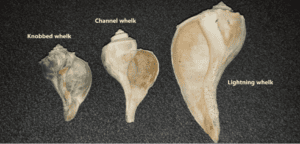
- Knobbed Whelk: Recognized as New Jersey’s state shell, the Knobbed Whelk is highly sought after by collectors. It features a sizable, robust shell with a right-handed spiral and a striking orange or pearly interior. These large predatory snails can reach impressive sizes, and discovering a complete “king” whelk is a memorable highlight of any beach trip.
- Atlantic Surf Clam: These are the beach’s workhorses—large, thick, oval bivalves known for their durability. Historically, they’ve served various purposes, from “ash trays” to makeshift tools for digging sandcastles. Their white or yellowish shells are typically among the most common discoveries after a high tide.
- Blue Mussel: During low tide, direct your gaze at the jetties and groins to spot thousands of these shiny, dark blue, and black shells. They are sleek, smooth, and frequently cluster together. On the beach, their insides often reveal a stunning, iridescent mother-of-pearl sheen.
- Common Slipper Shells, often known as “boat shells,” have a flat shelf inside that looks like a small seat. These distinctive mollusks are well-known for stacking together. It’s common to see multiple slipper shells fused in a chain, which is a reproductive strategy.
- Blood Ark: These robust, white shells are thick with deep ribs, resembling a fan or small boat. Their striking name comes from the red blood of the mollusk inside—a rare feature among bivalves—although the shell itself usually appears as a clean, stark white when washed up on the sand.

The “Cape May Diamond” Connection
While true Cape May Diamonds are quartz pebbles typically found further south at Higbee Beach and Sunset Beach, Ocean City beachcombers sometimes discover similar “diamonds” on the island’s southern tip. These are smooth, clear or frosted quartz stones shaped by the Delaware River and then transported into the Atlantic, carried northward by the tides. If you come across a clear, glassy pebble near Corson’s Inlet, it might be a traveler from the south.
Beachcombing Ethics: Respect the Shore
While exploring these natural treasures, it’s essential to practice responsible beachcombing to safeguard our coastal ecosystem’s health.
- Check for Occupants: Although collecting “empty” shells is usually fine, always verify for living creatures first. Many shells are temporary homes for hermit crabs, and the original mollusk might still be inside, retracted. If a shell feels heavy or moves, gently return it to the water.
- Don’t collect more than necessary; take only what you need or intend to display. Shells contribute to the beach’s natural cycle by eventually breaking down into the sand we walk on or providing calcium to marine life.
- Observe the dunes carefully: avoid walking into the dune grass when searching for shells. The dunes serve as a delicate, vital barrier for the island, and stepping on them can harm the plant life that stabilizes the sand.
Identifying seashells allows you to connect more deeply with the ocean’s rhythm. Next time you pick up a smooth Atlantic Surf Clam or a spiraling Whelk, remember you’re holding a piece of Ocean City’s living history, a small, beautiful fragment of “America’s Greatest Family Resort.”